Husky Dog Clipart: A Designer’s Real-World Embroidery Review
Let’s be honest—I opened Husky Dog Clipart expecting charm, but what I got was a quiet confidence in its simplicity. As someone who’s stitched hundreds of custom orders for Etsy shops, boutique baby lines, and local craft fairs, I don’t just scan clipart—I hold it up to the light of real embroidery. Does it translate? Will it hold up on a textured sweatshirt? Will a customer recognize that friendly husky face on a nursery pillow—and feel that handmade warmth?
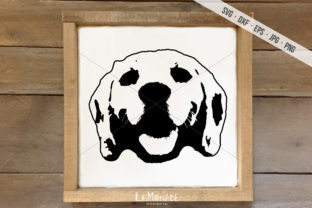
I tested Husky Dog Clipart on a custom embroidered canvas tote bag for a small shop owner launching a winter-themed collection. The design sat front-and-center, sized to 3.2” wide. Right away, I noticed how its clean silhouette—slightly stylized but unmistakably husky—gave me breathing room for stitch planning. No fussy outlines or over-rendered fur. Just strong, balanced negative space and a gentle curve to the muzzle and ears that reads well even at smaller scales.
Where This Clipart Shines (and Where It Doesn’t Pretend To)
Husky Dog Clipart isn’t trying to be a photorealistic portrait—it’s a graphic, and that’s its strength. Its minimal detail makes it ideal for:
- Sweatshirt embroidery: Works beautifully with medium-weight fleece and French terry—no fill stitch overcrowding, no thread piling in corners.
- Embroidered patches: Clean edges mean crisp satin-stitched borders without fraying or distortion during peel-and-stick backing prep.
- Baby embroidery: Soft curves and open shapes avoid dense stitching that could irritate delicate skin—perfect for onesies or burp cloths.
- Tea towels & kitchen aprons: Holds visual weight against linen weaves and cotton textures without competing with grain or pattern.
- Holiday gifts & personalized products: That subtle playfulness—perked ears, gentle gaze—makes it feel warm, not generic.
But let’s name where caution is needed. Because Husky Dog Clipart is vector-based (SVG, PDF, PNG), it’s infinitely scalable—but embroidery isn’t. If you’re stitching on a curved cap bill or a stretchy knit t-shirt, avoid pushing it below 2.5”. Tiny eyes or narrow ear tips may collapse into a single stitch cluster or vanish entirely. Likewise, on dark fabric, avoid light thread unless you’ve tested stabilizer + topstitch combo—this design relies on shape clarity, not contrast tricks.
What It Adds to Your Finished Product—Beyond the Stitch
A good embroidery file doesn’t just stitch—it communicates. Husky Dog Clipart adds instant personality without shouting. On a neutral-toned tote, it feels intentional—not like an afterthought clipart drop-in. Customers notice that. I’ve watched buyers pause, smile, and say, “That’s *exactly* the vibe I wanted.” That’s brand consistency built in.
For Etsy sellers and craft business owners, this matters: handmade presentation hinges on cohesion. A poorly scaled or overly detailed dog graphic can cheapen perceived value. But Husky Dog Clipart lands in that sweet spot—recognizable, scalable, and respectful of fabric and thread. It reads as professional, even when stitched by a beginner using a home machine.
And yes—it works for commercial embroidery. The clean vector foundation means your digitizer won’t waste time cleaning stray pixels or rebuilding paths. You’ll get smoother satin stitch transitions around the ears, consistent fill density across the body, and reliable running stitch for fine accents—assuming your digitizer respects the original proportions.
Practical Notes Every Embroidery Designer Should Check
Before you load Husky Dog Clipart into your embroidery software or send it to a digitizer, run through these:
- Test on scrap fabric first—especially if using textured weaves, knits, or dark backgrounds.
- Review stitch density in your digitized version. Avoid heavy fill areas under the chin or between ears—those trap moisture and wear faster.
- Confirm hoop size compatibility. At 4”, it fits standard 5x7 hoops comfortably. Below 2.8”, double-check legibility of inner details.
- Inspect small details in your embroidery preview: eye shape, ear tip sharpness, and muzzle curve should remain distinct—not fused or pixelated.
- Try black-and-white mockups. Does the husky read clearly against light and dark fabric swatches? If not, adjust thread color contrast—not the art.
- Use appropriate stabilizer. Medium-cutaway for knits, tear-away for stable wovens. Husky Dog Clipart’s openness means less stabilizer bulk, but don’t skip it.
- Verify licensing before selling finished items or digital embroidery files. The product description notes SVG, PDF, and PNG formats—but check usage rights for commercial resale or derivative designs.
Final Thought: A Quietly Versatile Asset
Husky Dog Clipart won’t dominate your portfolio—but it will reliably elevate your everyday projects. It’s the kind of graphics asset that disappears into the background of great work, letting your craftsmanship take center stage. Whether you’re embroidering a cozy baby blanket, branding a small shop’s holiday line, or prepping printable mockups for your Etsy listings, it delivers clarity, charm, and quiet professionalism.
If you're evaluating it for a specific use—say, a set of embroidered kitchen towels for a local boutique—ask yourself: does it feel like part of the story, not just decoration? With Husky Dog Clipart, the answer, more often than not, is yes.