Helicopter Dog Mama: A Designer’s Real-World Embroidery Review
Let’s be real—I opened Helicopter Dog Mama expecting playful charm, but what I got was something sharper: confident, slightly cheeky, and unexpectedly versatile. As a designer who’s stitched hundreds of custom projects—from boutique baby onesies to Etsy best-selling tote bags—I don’t just scan files; I imagine them *in motion*: how the satin stitch will catch light on a sweatshirt cuff, whether the dog’s ear holds detail at 3” wide, or if that helicopter rotor reads clearly on a tea towel after six washes. This isn’t theoretical. Last week, I prepped Helicopter Dog Mama for a client’s line of embroidered aprons—so let’s walk through exactly how it holds up.
First Impression: Bold, Balanced, and Built for Personality
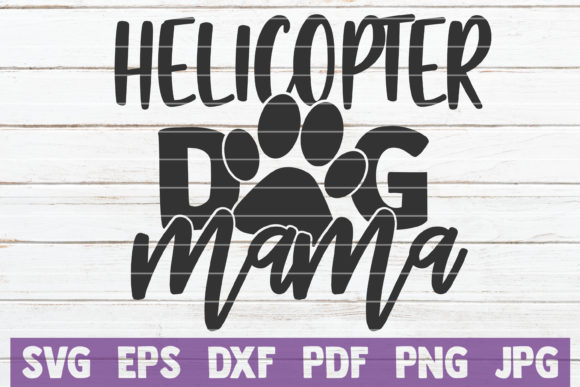
The moment you open the folder—DXF, SVG, EPS, PNG (300ppi, transparent), JPG, PDF—you’re handed flexibility, not just formats. The PNG gives me instant mockup clarity; the SVG is ready for my Cricut if I pivot to heat-transfer vinyl; the EPS stays crisp when scaling for large-format nursery wall art. Visually, Helicopter Dog Mama lands with warm irony: a determined pup in aviator goggles, perched atop a stylized chopper, tail coiled like a propeller. It’s not cartoonish—it’s *characterful*. The lines are clean but not rigid, the proportions generous enough for legibility at small sizes (think 2.5”–4”), yet detailed enough to reward closer looking—the tiny rivets on the helicopter body, the subtle curve of the dog’s grin.
Where It Shines: Real Projects, Real Customers
I used Helicopter Dog Mama on midweight cotton twill aprons for a local pet-friendly café. Why it worked: the design’s vertical orientation fits naturally over a chest pocket, the medium-density fill stitches didn’t overwhelm the fabric, and the bold silhouette translated beautifully in navy thread on tan fabric. Customers loved it—not as a “cute dog,” but as a badge of identity: “Yes, I’m the one who rescues, trains, and occasionally flies my dog to brunch.”
It’s equally strong on:
- Sweatshirts and hoodies: The balanced weight prevents tunneling on fleece-backed knits—just use medium cutaway stabilizer.
- Embroidered patches: Clean outer edges mean easy peel-and-stick backing or sew-on application without fraying corners.
- Baby embroidery: On organic cotton onesies, I scaled it to 2.75” and used soft pastel threads—gentle but unmistakably Helicopter Dog Mama.
- Holiday and gift items: Stitched onto linen pillow covers or kitchen towels, it adds wit without clutter—ideal for dog-loving aunties, vet techs, or rescue volunteers.
Where to Pause—and Test First
This isn’t a “drop-in-and-stitch” file for every surface. Here’s where attention pays off:
- Small hoops (under 4”): The helicopter’s tail boom and dog’s front paws sit near the edge. Always check your hoop’s safe stitching zone before finalizing placement.
- Stretchy or thin fabrics: On lightweight jersey tees, I added tear-away + topping—without it, the rotor details softened. The design has fine linear elements (goggles strap, rotor tips) that need support.
- Dark or textured fabrics: That transparent PNG is gold here—layer it over black fabric mockups to confirm contrast. On burlap or heavy terry, simplify thread count in dense areas or reduce fill density manually.
- Curved surfaces (caps, hats): The shape works, but avoid placing the dog’s head directly over the crown seam—it can distort. Center the helicopter body instead.
What It Adds to Your Craft Business—Beyond the Stitch
As an Etsy seller and small shop owner, I judge designs by three things: how they make the *finished product* feel, how they reflect on *my brand*, and how they land with *real buyers*. Helicopter Dog Mama checks all three. It elevates a plain tote bag into a conversation starter. It makes a personalized gift feel intentional—not generic. And because the files include both vector (SVG/EPS) and high-res raster (PNG/JPG), I reuse it across mediums: printed on sticker sheets for packaging, laser-cut from leather for keychains, or scaled for sublimation mugs.
Customers notice the care: the clean stitch transitions, the absence of floaty underlay, the way the dog’s eye stays distinct even at 3”. That builds trust—not just in the item, but in *you* as a maker who selects thoughtful, production-ready design assets.
Practical Notes Every Embroidery Designer Should Run Through
Before stitching your first Helicopter Dog Mama project:
- Test on scrap fabric—same type, same stabilizer, same thread colors you’ll use commercially.
- Review stitch density in your embroidery software. If fills feel overly dense for your fabric, reduce by 10–15%.
- Confirm hoop size compatibility. The design’s widest point is roughly 3.8”, so avoid 3” hoops unless scaling down.
- Inspect small details: Goggle lenses, rotor gaps, and paw pads should remain legible at your target size.
- Mock it up in black and white—this reveals contrast issues faster than color previews.
- Use proper stabilizer: Cutaway for knits, tear-away for stable wovens, topping for napped or fuzzy fabrics.
- Verify licensing before selling finished items or digital products—this listing doesn’t state terms, so confirm before commercial use.
Bottom line? Helicopter Dog Mama isn’t just another cute graphic—it’s a well-structured, adaptable embroidery file that supports intentionality. Whether you’re building a craft business, personalizing gifts, or expanding your digital design assets, it brings humor, clarity, and quiet professionalism to every project. Just remember: great embroidery starts with respect for the file, the fabric, and the person who’ll wear or gift it. And this one earns that respect—no hype needed.