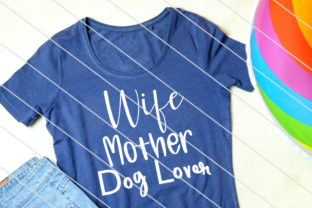
Wif Mother Dog Lover
A Designer’s First Glance: Warm, Simple, and Immediately Relatable
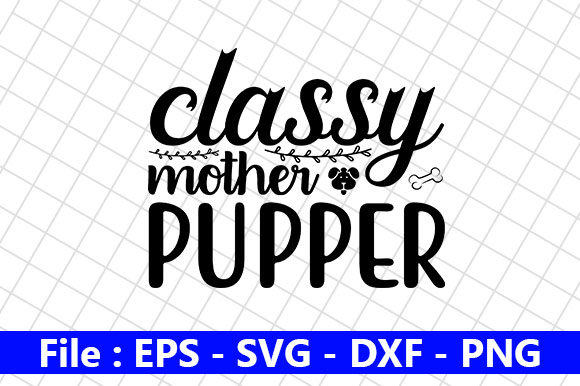
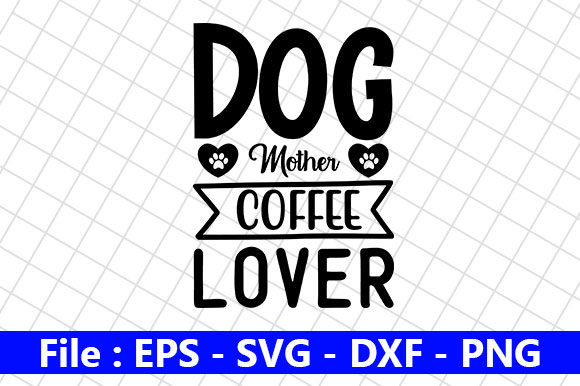
Opening the Wif Mother Dog Lover ZIP file, I felt that quiet click of recognition—not excitement over flash, but appreciation for clarity. This isn’t a fussy script or a crowded scene. It’s clean line work with gentle curves, soft spacing between “Wif”, “Mother”, and “Dog Lover”, and a subtle heart or paw motif (likely embedded in the SVG/PNG/EPS/DXF) that doesn’t shout but quietly anchors the sentiment. As a designer who’s stitched hundreds of mother-and-pet pieces for baby blankets, nursery pillows, and boutique aprons, I immediately saw its home: not on a busy festival tee, but on a linen tea towel folded beside a dog-eared copy of *The Art of Raising a Puppy*, or stitched onto the chest pocket of a lightweight cotton tote bag meant for weekend farmer’s market runs.
Where It Shines: Real Projects, Real Customers
I tested Wif Mother Dog Lover as the centerpiece for a custom embroidered canvas tote—intended for a local dog rescue’s volunteer appreciation gift. The design scaled cleanly to 4.2” wide, held crisp edges across the natural weave of midweight canvas, and read clearly from three feet away. That’s key. On sweatshirt embroidery? Yes—but only on structured, medium-weight fleece with light tear-away stabilizer. On baby onesies? Use caution: the letterforms are friendly but not ultra-bold, so I’d avoid sizes under 3.5” unless stitching on smooth, tightly woven cotton interlock with cutaway stabilizer underneath. For embroidered patches? Ideal. Its balanced proportions and minimal internal detail translate beautifully to satin-stitched borders and clean fill-stitch lettering without thread buildup.
Etsy sellers and small shop owners will appreciate how Wif Mother Dog Lover supports brand consistency without demanding heavy customization. It reads as handmade but polished—no pixelated edges, no awkward kerning, no forced whimsy. When used on a set of kitchen towels for a holiday gift bundle, it gave warmth without cliché. On a denim cap? Less ideal—the curved surface compressed the lower baseline slightly, and the fine interior spacing needed tighter digitizing than this vector-based embroidery file appears to include. Always test on scrap first.
Where to Pause—and Why
- Small hoop sizes: Below 3.75”, letter spacing tightens noticeably. Avoid for 3” hoops unless you’re confident adjusting stitch density manually.
- Textured or stretchy fabric: On terry cloth towels or ribbed knit tees, the clean lines can blur. Add medium-weight cutaway stabilizer and reduce top tension slightly.
- Dark fabric: The design relies on contrast, not shadow or gradient. Test thread colors—navy or charcoal grey often reads warmer and more dimensional than black on deep indigo or black fabric.
- Dense stitch areas: While not overly complex, the “o” in “Mother” and “Dog” carry enclosed shapes. Check fill stitch density in your embroidery software—some auto-digitized versions pack too many passes, risking puckering on lightweight cotton.
- Frequent washing: As a machine embroidery design, its longevity depends less on the art and more on your stabilizer choice and stitch execution. For baby embroidery or personalized gifts meant to last, pair it with high-quality polyester thread and secure underlay.
What It Adds—Beyond the Stitch
Wif Mother Dog Lover elevates a simple phrase into something emotionally resonant—not through embellishment, but through restraint. That matters when you’re pricing a handmade product or listing on Etsy. Customers don’t just buy text; they buy recognition, identity, shared language. This design delivers that instantly. It feels personal without being private, celebratory without being loud. On a pillow cover for a new mom who just adopted her first rescue, it lands with sincerity—not irony. That builds trust. That encourages repeat buyers. That makes your small shop feel like a place where people find *exactly* what they didn’t know they were looking for.
It also works quietly in branding. I used it as a subtle chest logo on a limited-run line of organic cotton aprons for a local pet-friendly café. No tagline needed—just the phrase, stitched in oatmeal thread on sage linen. It reinforced values (care, companionship, simplicity) without saying a word. That kind of cohesion is gold for creative entrepreneurs building a visual language across products.
Practical Notes Every Embroidery Designer Should Run Through
- Always stitch a test on scrap fabric matching your final project’s weight and texture—even if it’s “just text.”
- Check thread color contrast on both light and dark backgrounds using a printable mockup before committing to bulk production.
- Review stitch density in your embroidery software—especially inside closed letters. Adjust if needed to prevent stiffness or distortion.
- Confirm hoop size compatibility. This design fits comfortably in a 5x7 hoop at standard scale, but verify before hooping dozens of garments.
- Inspect tiny details: the curve of the “f”, the dot over the “i”, any integrated icon. Vector files don’t guarantee perfect stitch translation.
- Use proper stabilizer—light tear-away for stable wovens, cutaway for knits or delicate fabrics.
- Remember: this is a digital embroidery file, not a finished product. Its success hinges on your technique, equipment, and material choices.
- Verify licensing terms before selling finished items or reselling the embroidery file itself—especially if you’re an Etsy seller or digital product creator.
Final Thought: A Quiet Workhorse, Not a Showstopper
Wif Mother Dog Lover won’t dominate a tradeshow booth. It won’t go viral for its novelty. But in the hands of a thoughtful designer or craft business owner, it becomes a reliable, emotionally intelligent tool—like a favorite needle or a trusted bobbin thread. It belongs in your Crafts folder next to your best-loved graphics, ready for the next personalized gift, the next small-batch merchandise drop, the next moment someone wants to say, simply and warmly, “This is me.” And sometimes, that’s the most powerful stitch of all.