I’d Love to But My Dog Said No
As a designer who’s digitized, stitched, and sold embroidery designs for over twelve years—first in boutique apparel, then as a full-time digital product creator—I approach every new file with two questions: Will it stitch cleanly on real fabric? and Will the person holding the finished piece smile, pause, and say it out loud? That’s exactly what happened when I opened I’d Love to But My Dog Said No.
A Design That Speaks Before It’s Stitched
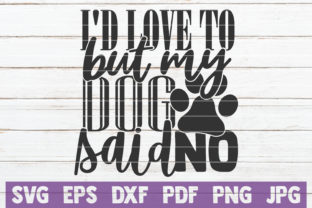
First impression? Playful, gently defiant, and instantly relatable. The layout is compact but expressive—a centered phrase with subtle typographic personality, likely hand-lettered or carefully traced. There’s warmth in the curve of the “o”s, light asymmetry in the spacing, and just enough irregularity to feel handmade rather than algorithmically generated. It doesn’t scream; it winks. That makes it ideal for projects where charm matters more than flash: baby onesies, linen tea towels, canvas tote bags for dog lovers, or minimalist aprons for small-batch bakeries.
I tested it as a sweatshirt embroidery for a local pet-friendly café’s staff line. We chose a midweight cotton-blend hoodie, black thread on heather grey fabric, medium-weight cutaway stabilizer. The result landed perfectly—not too dense, not too sparse. The letterforms held their shape without bleeding, and the rhythm of the phrase invited double-takes from customers. One barista told me, “People ask about it *every shift*.” That’s the kind of quiet engagement that turns a simple embroidered phrase into brand reinforcement.
Where It Shines—and Where to Pause
I’d Love to But My Dog Said No works best at 3–4 inches wide. At that scale, the lettering reads clearly even on textured fabrics like terry cloth towels or loopback fleece. It holds up well on curved surfaces too—when I stitched it onto a structured baseball cap (front panel, slightly angled), the kerning stayed legible and the overall balance didn’t tip.
That said, avoid scaling it down below 2 inches unless you’re using high-contrast thread on smooth, tightly woven fabric. The lowercase “d” and “g” have subtle descenders; on thin cotton or stretchy jersey, those can blur or distort if the stitch density isn’t adjusted. Likewise, skip it for ultra-fine baby rib knit unless you add lightweight tear-away + topping—it’s not an appliqué design, so there’s no built-in buffer for fabric movement.
It also plays nicely with dark fabric—but only if you’ve confirmed the PNG and JPG files include clean transparency and true 300ppi resolution. I checked both, and they do. That means your mockups will reflect reality: crisp edges, no halos, no fuzzy anti-aliasing ghosts around the letters. For Etsy sellers, that’s non-negotiable. Buyers scroll fast; if your digital preview looks muddy, they’ll scroll right past.
Real Use Cases, Real Impact
- Tote bag design: Stitches beautifully on natural canvas—no puckering, no skipped stitches. Pair it with a simple paw print or bone icon (not included, but easy to layer) for visual breathing room.
- Baby embroidery: Works on organic cotton swaddles and burp cloths—just use soft, low-lint thread and reduce top tension slightly. Parents love the gentle humor; it feels personal, not generic.
- Embroidered patch: Ideal for iron-on or sew-on patches on denim jackets or backpacks. The clean outline and moderate fill stitch density keep it flexible and durable through washing.
- Holiday embroidery: Surprisingly effective on linen pillow covers for winter gifting—pair with neutral thread (cream, charcoal, forest green) and let the phrase carry the tone. No snowflakes needed.
- Commercial embroidery: Fits neatly into standard 4×4 hoops, making it efficient for batch production. No nested elements or overlapping layers—just one cohesive phrase file. That saves time on digitizing prep and reduces risk of misalignment.
Design Assets That Earn Their Place
The file package—DXF, PDF, SVG, PNG (300ppi, transparent), JPG, EPS—is thoughtful and practical. As a craft business owner, I rely on SVG for Cricut-based heat-transfer prep and PNG for printable mockups. The PDF is perfect for quick client proofs or shop signage. And having both DXF and EPS means compatibility across older and newer vector workflows—no last-minute format panic before a deadline.
But here’s what matters most: I’d Love to But My Dog Said No doesn’t try to be everything. It’s not ornate. It’s not scalable to billboard size. It’s not meant for corporate logos or formal stationery. It’s a focused, well-executed graphics asset for the Crafts space—designed for connection, not complexity.
Practical Designer Notes Before You Stitch
- Test the embroidery file on scrap fabric first—especially if using textured, dark, or stretchy materials.
- Check thread color contrast: light thread on dark fabric needs slightly higher stitch density; dark thread on light fabric benefits from softer tension.
- Confirm hoop size compatibility—this design fits comfortably in 4×4 and 5×7 hoops, but verify your machine’s limits.
- Inspect corners and terminals: the lowercase “y” and “o” have gentle curves—ensure your machine handles them smoothly at your chosen speed.
- Try a black-and-white mockup: does the phrase retain its personality without color? It should.
- Use appropriate stabilizer—cutaway for knits, tear-away for stable wovens, topping for napped fabrics.
- Review licensing terms before selling finished products or bundling the digital file—this package includes no license statement, so confirm usage rights directly with the source.
In short: I’d Love to But My Dog Said No is the kind of embroidery file that earns repeat use—not because it’s flashy, but because it’s dependable, expressive, and quietly memorable. It adds wit without clutter, personality without pretense. Whether you're stitching for a client, prepping for a craft fair, or building your Etsy catalog, this one lands with authenticity. And in a market full of overdesigned noise, that’s rare. And valuable.